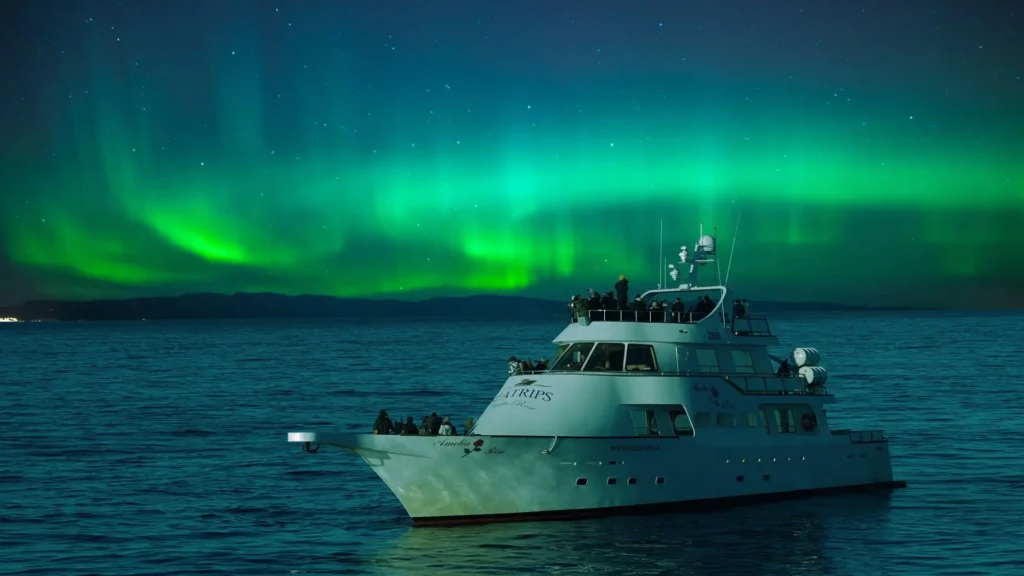
Knowing exactly what to wear on a whale watching tour in Iceland is the secret to transforming a freezing, uncomfortable boat ride into the maritime adventure of a lifetime. The North Atlantic Ocean is stunning, but it is notoriously unpredictable. While you might step out of your hotel in Reykjavík feeling completely comfortable in a light jacket, the conditions out on Faxaflói Bay or Eyjafjörður demand a much higher level of preparation.
Whether you are seeking the Midnight Sun in July or hunting for Orcas under the winter Northern Lights, the Icelandic environment requires strategic packing. This expert guide will walk you through the essential three-layer system, breakdown the differences between yacht and RIB speedboat attire, and ensure you are perfectly geared up for your upcoming Iceland Discover tour.
Why Dressing Right is Your Most Important Pre-Tour Step
The Realities of the North Atlantic: Land vs. Sea Temperatures
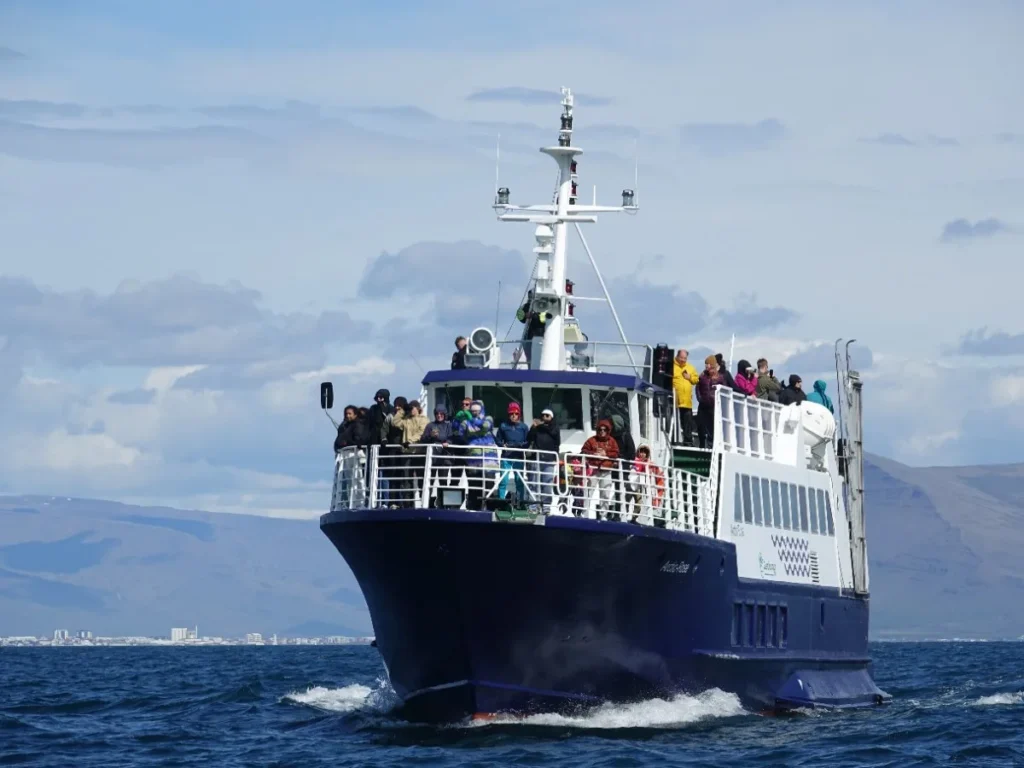
One of the most common mistakes travelers make is dressing for the weather on land rather than the weather at sea. Once your vessel leaves the shelter of the harbor, you are immediately exposed to the unhindered Atlantic wind.
This dramatic wind chill factor means the perceived temperature on the open ocean is routinely 5 to 10°C colder than it is back on land. Even on a perfectly sunny day in Reykjavík, the ocean breeze carries a biting chill. Preparing for this drop in temperature is essential, not just for your comfort, but so you can remain out on the observation decks longer to capture those perfect whale sightings without retreating inside.
The Science of Staying Warm: The Three-Layer System
Base Layer: Why Merino Wool Wins Every Time
Your primary defense against the cold starts right against your skin. The absolute best choice for a base layer is high-quality Merino wool or an advanced synthetic thermal blend. These materials actively wick moisture away from your body, ensuring that any sweat generated while moving around the deck doesn’t chill you later.
Critical Warning: You must avoid cotton at all costs. Cotton acts like a sponge for moisture and loses all its insulating properties when damp, leading to rapid cooling.
The Mid-Layer: Trapping Heat with Fleece and Icelandic Wool
Once you have secured your moisture-wicking base, your mid-layer’s job is to trap your body heat. A thick, high-quality fleece jacket is a fantastic option that provides substantial warmth without heavy bulk.
For the ultimate local touch, consider wearing a traditional Icelandic Lopapeysa. Knitted from 100% Icelandic sheep wool, these sweaters are uniquely designed by nature to be both highly insulating and naturally water-repellent, making them a favorite among local sailors and guides.
The Outer Layer: Blocking the Atlantic Wind and Spray
Your final layer is your shield against the elements. A robust, windproof, and waterproof outer shell is absolutely mandatory. While many premium tours offer coveralls, having your own reliable hard-shell jacket and waterproof trousers guarantees you stay dry from sudden sea spray.
Before your tour, always check the official Icelandic Met Office (Vedur.is) for the latest wind and precipitation forecasts so you can choose the appropriate thickness for your outer shell.
Seasonal Clothing Strategies: From Midnight Sun to Northern Lights
Summer (May – September): Light Layers and Polarized Lenses
Summer in Iceland is relatively mild, but the maritime environment still demands respect. During these months, you can swap out heavy parkas for lighter thermals and highly breathable hiking trousers beneath your waterproof shell.
Because the summer sun sits low on the horizon, the glare reflecting off the ocean surface can be intense. Polarized sunglasses are an absolute necessity for spotting whales through the water’s reflection.
Winter (October – April): Maximum Insulation and Thermal Accessories
Winter whale watching is a truly magical experience, often pairing wildlife encounters with snow-capped fjords or even the Northern Lights. However, the temperatures can easily drop below freezing.
During these months, heavyweight thermals and deeply insulated winter parkas are non-negotiable. Opt for thick mittens instead of fingered gloves, as mittens keep your fingers together to share radiant heat. Do not skip on heavily insulated, waterproof trousers to protect your legs from the freezing wind shear.
Tour-Specific Gear: What Iceland Discover Provides for You
On the Yacht (Amelia Rose): Heated Lounges and Premium Comfort
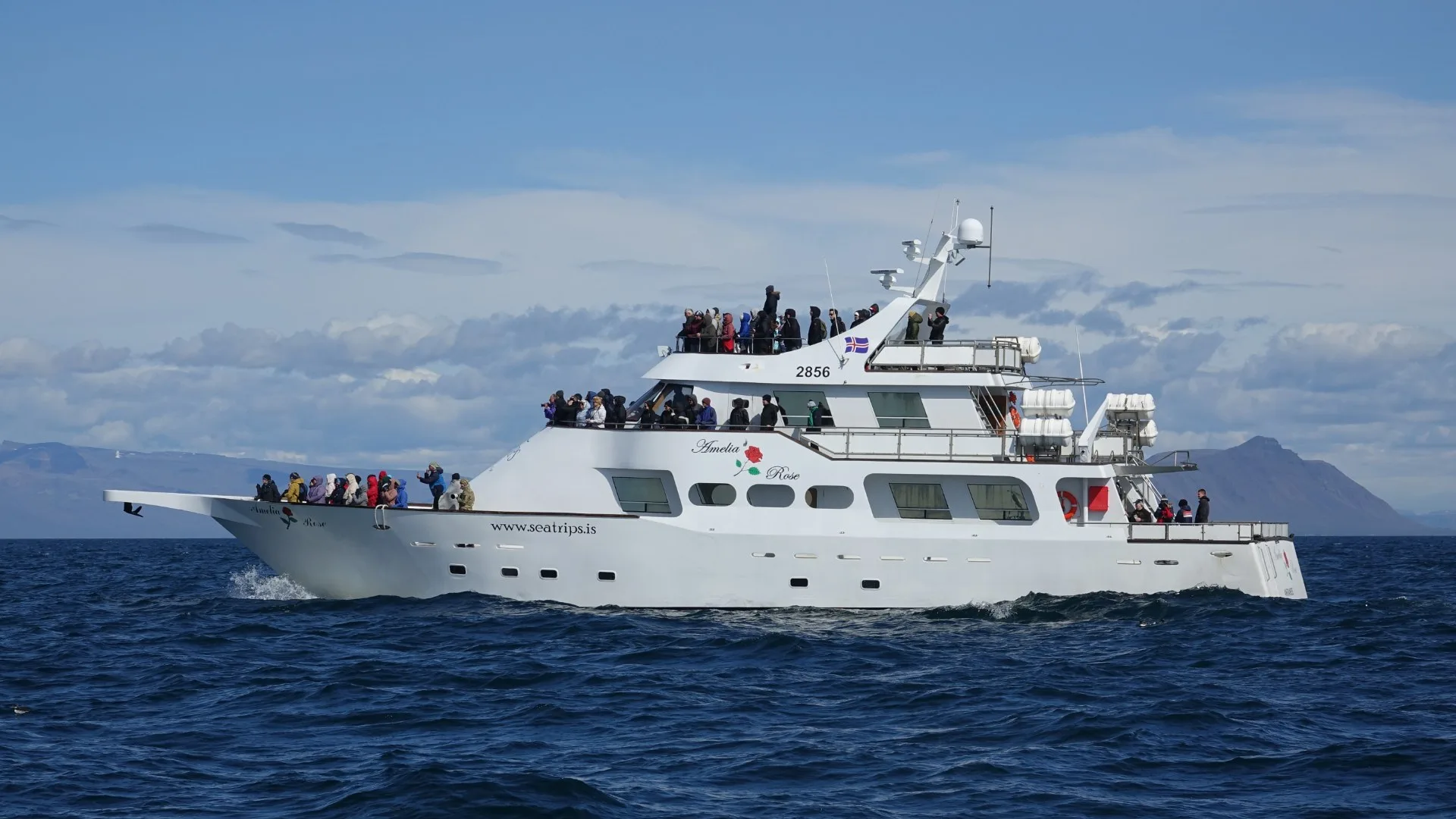
Choosing a premium vessel dramatically changes how you need to dress. The Amelia Rose yacht is designed for comfort, featuring beautifully heated indoor lounges, a fully stocked bar for hot drinks, and panoramic windows.
If you are sailing on the yacht, you have the flexibility to dress slightly more casually under your heavy outer shell. You can comfortably relax inside wearing just your base and mid-layers, stepping out onto the viewing decks only when a magnificent Humpback or Minke whale is spotted. The crew also provides warm blankets to wrap up in while you enjoy the fresh air.
The RIB Experience: Why Our Provided Flotation Overalls Are a Game Changer
For thrill-seekers opting for the high-speed RIB (Rigid Inflatable Boat) experience, you will be entirely exposed to the elements. Because these boats sit incredibly close to the water, the wind and sea spray are much more intense.
To combat this, Iceland Discover outfits every RIB passenger with specialized heavy-duty flotation overalls, life vests, goggles, and rugged gloves. While these provided suits are exceptionally warm, they are meant to be worn over your own clothes. You still need to arrive wearing a solid base layer and a warm mid-layer to ensure maximum insulation beneath the suit.
Essential Accessories for Every Explorer
Footwear: The Forgotten Essential (Why Boots Matter More Than Sneakers)
Many travelers invest heavily in jackets and completely forget their feet. The decks of whale watching boats get wet, cold, and notoriously slippery.
Your footwear must feature thick, insulating rubber soles and sturdy traction. Waterproof hiking boots are the only recommended option for this environment. Sneakers, canvas shoes, and certainly sandals are massive safety and comfort liabilities. SeaTrips similarly highlights why proper, closed-toe waterproof boots are a fundamental requirement for Icelandic maritime excursions.
Head, Hands, and Neck: Sealing the Heat Gaps
Even with the best coat in the world, exposed skin around your neck or head will drain your body heat rapidly. A high-quality wool beanie that fully covers your ears is vital.
Instead of wearing a traditional scarf—which can dangerously whip around in high winds or become untied—opt for a snug neck gaiter or buff. Lastly, always pack a spare pair of thick wool socks in your day bag; if water happens to breach your boots, changing into dry socks immediately will save your trip.
Expert Pro-Tips for a Flawless Adventure
Seasickness Prevention: A Pro’s Advice
Even the most seasoned travelers can succumb to the rocking of the North Atlantic. If you are prone to motion sickness, preparation is your best defense.
Take over-the-counter seasickness medication 30 to 60 minutes before boarding. Waiting until you feel ill on the boat is too late. Staying out in the fresh air, keeping your eyes fixed on the stable horizon, and avoiding looking down at your phone can also drastically reduce symptoms.
Protecting Your Tech: Camera and Battery Care in the Cold
Frigid ocean temperatures are notorious for draining lithium-ion batteries at an alarming rate. Nothing is more frustrating than a dead camera right as a whale breaches.
Keep your smartphone and spare camera batteries tucked away in an inner pocket close to your body heat until you need them. When moving back and forth between the freezing deck and the heated yacht lounge, keep your camera inside your bag to prevent condensation from forming on the lens.
Conclusion: Ready for the Encounter of a Lifetime
Final Packing Checklist for Your Iceland Discover Tour
Preparing for your Icelandic maritime adventure doesn’t have to be stressful when you follow the three-layer system. Whether you are sipping hot cocoa on the Amelia Rose or speeding across the waves in a RIB, dressing appropriately ensures the focus remains entirely on the incredible wildlife.
Before you head to the harbor, double-check this essential list:
- Base Layer: Moisture-wicking Merino wool (Top and bottom).
- Mid-Layer: Thick fleece or traditional Icelandic Lopapeysa sweater.
- Outer Layer: Windproof and waterproof jacket and trousers.
- Footwear: Sturdy, waterproof boots with thick soles and grip.
- Accessories: Wool beanie covering ears, neck gaiter/buff, mittens, and polarized sunglasses.
- Extras: Seasickness medication and fully charged spare batteries kept in warm pockets.

A collective of passionate captains, naturalists, and sea experts dedicated to sharing the wonders of the North Atlantic.